
Urea 40% Cream Guide: Strength, Uses, and What Actually Happens to Your Skin
Urea 40% cream is a skin-softening emollient and effective keratolytic that helps soften, loosen and shed the outermost layer of rough, hardened skin without abrasion or scrubbing. It works differently from the 10% to 20% versions most people have already tried and abandoned. Consistent twice-daily application for three to four weeks is the realistic window where thick calluses and severely cracked heels visibly change.
I have looked at a lot of urea formulations over the years. The most common mistake is not using 40%. It is using 10% and expecting 40% results. People apply a drugstore urea cream for two weeks, see a marginal change, and conclude urea does not work for them. The problem is concentration, not the ingredient. At 10%, urea is primarily a humectant that draws water into the skin. At 40%, it actively exfoliates and softens hardened tissue. Those are functionally different products with different mechanisms, and treating them as interchangeable is where most people lose months of progress.
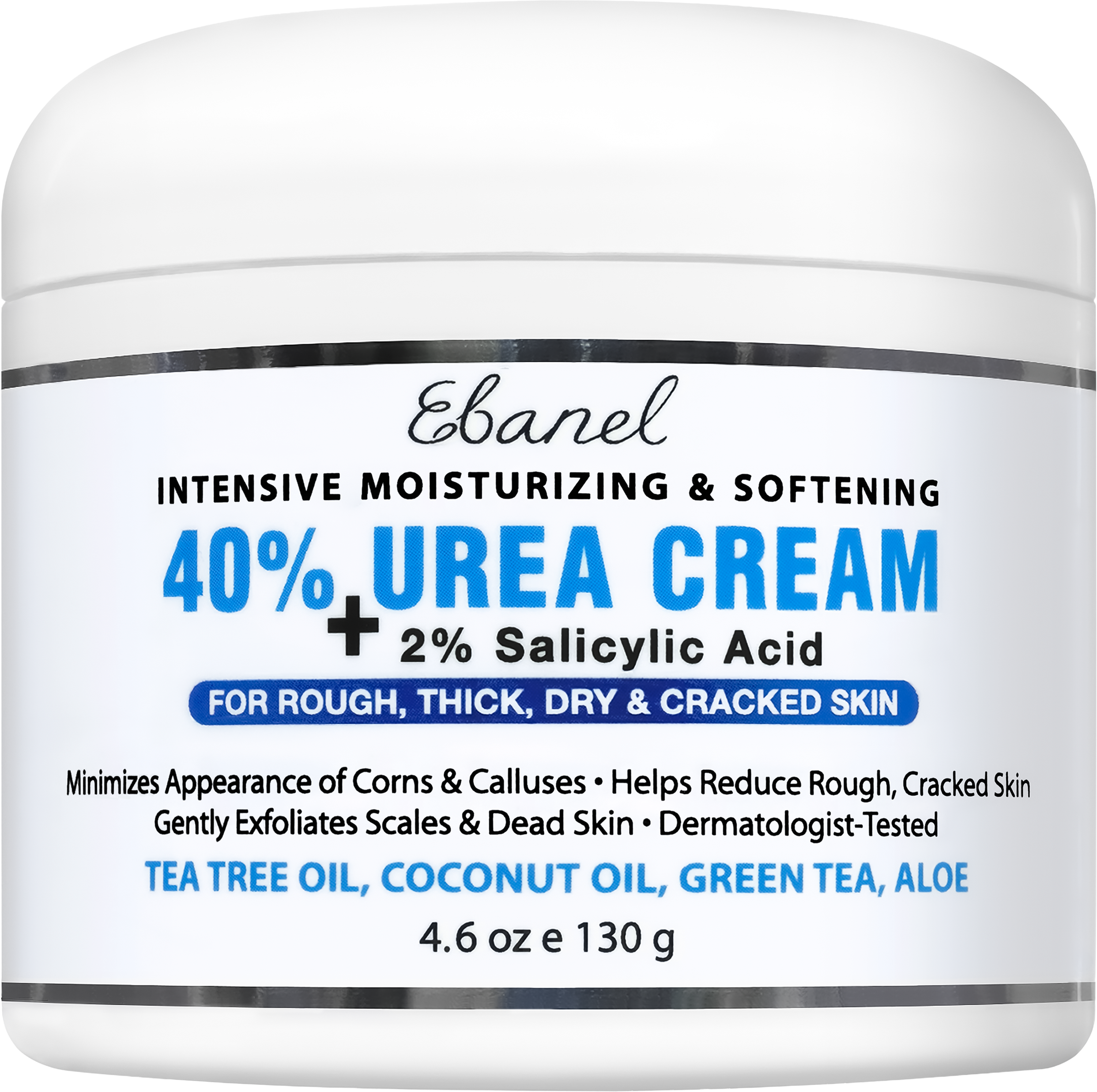
What 40% Urea Actually Does to Your Skin
40% urea helps soften and loosen the outermost hardened skin layer without cutting, scrubbing, or abrasive action. Lower concentrations work primarily by attracting water into the skin. At 40%, the action shifts: urea proactively exfoliates the surface layer so dead skin cells shed on a controlled schedule. The result is structural softening, not surface lubrication.
The way urea interacts with skin at the cellular level has been studied extensively. At higher concentrations, urea is recognized for its skin-softening and exfoliating properties on rough and thickened skin. At 40%, that effect is meaningfully stronger than at 20%, which is why people who have tried lower-strength products for weeks without results often see a clear difference when they move to 40%.
The concentration gap matters more than most people realize. 40% urea is roughly four to eight times the concentration of the five to ten percent found in standard drugstore moisturizers. If you have used a lower-strength product without results on genuinely thick skin, that gap explains why. Pairing that concentration with 2% salicylic acid, as Ebanel does, targets two layers of hardened skin simultaneously rather than one.
Urea Concentration Guide: Which Strength for Which Problem
The right urea concentration depends on what your skin is doing, not just how dry it feels. Start at the wrong strength and you will spend four weeks on a product that cannot do what you are asking of it.
| Concentration | Primary Action | Best For | Application |
|---|---|---|---|
| 2 to 10% | Humectant and mild moisturizer | General dry skin, sensitive skin, face, daily body use | 1 to 2 times daily across larger areas |
| 10 to 20% | Mild exfoliant | Rough heels, mild calluses, moderate dry skin | 1 to 2 times daily on targeted zones |
| 40% | Active exfoliant and emollient | Thick calluses, severely cracked heels, thickened nails, rough elbows and knees | 2 times daily on affected area only |
| 50% and above | Rx-strength exfoliant | Physician-directed use only | Physician-directed only |
The friction point most people hit is starting at 10% because it feels like the cautious choice. For general dry skin, that is reasonable. For a confirmed thick plantar callus that has been building for months, starting at 10% will produce close to no visible result in a standard four-week trial. You will conclude urea does not work. Then you will try something else. The right starting point for thick calloused skin is 40%, and pairing it with salicylic acid accelerates what urea alone takes longer to do.
Where to Use 40% Urea and Two Places to Avoid
40% urea belongs on zones where skin is thickest: heels, balls of the feet, elbows, knees, and thickened fingernails or toenails. Those areas have enough surface thickness to tolerate proactive exfoliating activity without excess irritation.
Two places it does not belong: the face, open wounds, and bleeding skin.
Facial skin, even on areas with texture concerns, is structurally thinner than the skin on your feet or elbows. 40% concentration on facial tissue is too aggressive for most people. A 5 to 10% formulation is the appropriate starting point for facial dry skin or texture issues. The second boundary is open wounds and bleeding skin. Urea on intact skin is well-tolerated. On an open wound, it can intensify stinging and may interfere with skin recovery. Apply around those areas, not on them.
For specific guidance on foot and heel application zones, see Ebanel 40% Urea Cream with Salicylic Acid for cracked heels and dry feet.
Why 40% Urea Works Better with Salicylic Acid
40% urea softens skin by helping loosen the outermost hardened layer. Salicylic acid works on a different level, breaking down the bonds between dead skin cells on the surface. Combined at 40% urea and 2% salicylic acid, they address two layers simultaneously. That is why the combination outperforms urea at any concentration when the target is a hardened callus, cracked heel, or thickened nail.
At 2% salicylic acid, the addition is meaningful without being aggressive. Most users do not experience additional irritation over a urea-only product at that ratio. The payoff is faster softening and less total application time to reach the same outcome. For long-standing calluses that have not responded to other products, the dual mechanism is what changes the result.
The Ebanel formulation combines both at maximum cosmetic strength. See Ebanel 40% Urea Cream with Salicylic Acid for stubborn calluses for the full ingredient breakdown and size options.
How to Apply 40% Urea Cream: Step-by-Step Protocol
Step 1: Wash and pat-dry the affected area. Skin should be damp, not soaking. Wet skin dilutes the active concentration on contact and reduces how effectively it reaches the hardened surface layer. Towel-dry to damp, then apply.
Step 2: Apply a thin, even layer to the affected area only. Do not spread across large body surfaces. 40% urea is a targeted product, not a body lotion. Cover the callus or cracked zone and stop at the edges. Applying to surrounding healthy skin wastes product and can create unnecessary sensitivity in areas that do not need active exfoliation.
Step 3: Let the cream absorb fully before covering. Wait five minutes before putting on socks, gloves, or footwear. Trapping the cream under fabric before it absorbs causes uneven distribution and reduces effectiveness. The product should feel fully absorbed and non-tacky before you cover it.
Step 4: Repeat twice daily, morning and night, for a minimum of four weeks. Once-daily application at 40% consistently underperforms the twice-daily protocol. The exfoliating action is cumulative. Skipping the morning application and doubling up at night is not equivalent to two properly spaced applications.
What to Expect Week by Week
Most people quit during week one. Here is what is actually happening at each stage so you can tell the difference between the product working and a genuine reaction.
Week 1: May expect mild stinging on first application, especially on recently washed skin. Surface skin begins to loosen and you may see flaking or peeling within the application zone. This is the exfoliating action working, not an irritation response. A true reaction involves redness, warmth, or swelling spreading beyond the application zone. Contained peeling within the zone is expected and means the product is doing its job.
Week 2: Rough texture starts decreasing. The outermost hardened layer is actively shedding. Skin may feel noticeably softer after washing even before you apply the cream. Cracking in heels typically becomes less sharp at the edges.
Week 3: The clearest signal that 40% is working. Callus size is visibly reduced. Skin is pliable in areas that previously felt rigid. People who stop at week two and restart often see this change arrive quickly on the second attempt.
Week 4: For severe or long-standing calluses, four weeks of twice-daily use is the realistic minimum for significant change. Mild cases resolve faster. If you reach four weeks with no improvement, consult a physician to rule out an underlying cause.
The Unpopular Opinion on Urea 40%
The standard advice is to start with a lower percentage and work your way up. That is correct for sensitive skin and facial use. For confirmed plantar calluses, it is the wrong starting point.
Here is the problem. Starting at 10% on a thick heel callus means you will apply it consistently for three to four weeks, see minimal visible change, and conclude urea does not work for your skin. The ingredient did not fail. The concentration did. Plantar calluses on heels and the balls of feet can be four to ten times thicker than normal skin. A 10% exfoliant on tissue that dense produces close to no visible results within a standard trial window.
The start-low guidance comes from a sensible general-population default. Most people reaching for urea for the first time have mild dryness, not structural calluses. If your situation is a callus that pumice has not touched in six months, starting low is not safer. It is just slow enough that you will quit before the ingredient gets a real test.
Comparison: Generic Urea 10 to 20% vs Generic Urea 40% vs Ebanel 40% Urea with Salicylic Acid 2%
| Feature | Generic Urea 10 to 20% | Generic Urea 40% | Ebanel 40% Urea with SA 2% |
|---|---|---|---|
| Primary action | Humectant and mild exfoliant | Active exfoliant and emollient | Dual exfoliant targeting two skin layers |
| Best for | General dry skin, mild roughness | Thick calluses, cracked heels, thickened nails | Hardened calluses, cracked heels, thickened nails, rough thickened skin |
| Application frequency | 1 to 2 times daily | 2 times daily | 2 times daily |
| Time to visible result | 4 to 6 weeks for mild cases | 2 to 4 weeks | 1 to 3 weeks for severe calluses |
| Appropriate for face | Yes at lower end of range | No | No |
| OTC availability | Yes | Yes | Cosmetic product, no prescription needed |
| Sensitivity risk | Low | Low to moderate on sensitive skin | Low to moderate on thin skin |
For the Ebanel formulation combining both actives at maximum cosmetic strength, see Ebanel 40% Urea Cream with Salicylic Acid for thick calloused skin.
FAQ: 40% Urea Cream
Is 40% urea too strong for skin? 40% urea is not too strong for thick calloused skin on feet, heels, elbows, or knees. It is too strong for facial skin and should not be applied to open wounds or bleeding skin. For the body zones it is formulated for, 40% is the concentration where visible results become achievable that lower strengths cannot deliver.
Is 40% urea cream available without a prescription? Yes. Ebanel's 40% urea cream with 2% salicylic acid is a cosmetic product and does not require a prescription. It is available to purchase directly at ebanel.com. If you are unsure whether this formulation is right for your situation, a pharmacist or dermatologist can help you choose.
Can I use 40% urea cream on my face? Not recommended at this concentration. Facial skin is structurally thinner than the skin on your feet or elbows. Active exfoliation at 40% causes excess sensitivity for most facial skin types. Use a 5 to 10% concentration for facial dry skin or texture concerns instead.
How long does it take for 40% urea cream to work on calluses? Twice-daily application produces visible texture change by week two to three for moderate calluses. Severe or long-standing calluses take a full four weeks of consistent use. Once-daily application extends that timeline significantly. For the full twice-daily protocol and formulation details, see Ebanel 40% Urea Cream with Salicylic Acid for thick calloused skin.
What happens if I apply too much? Applying too thick a layer does not accelerate results. It wastes product. A thin, even layer that absorbs fully outperforms a heavy application that sits on top of the skin.
Is 40% urea cream safe during pregnancy? Consult your physician before use if you are pregnant or trying to conceive.
Can 40% urea cream soften thickened toenails? Yes. Twice-daily application over four weeks helps soften thickened nail tissue and makes trimming easier. If you have concerns about the underlying cause of nail thickening, consult a physician before use.
What is the difference between urea 40% cream and urea 40% gel? Vehicle affects skin feel and contact time. Cream stays in contact longer and provides additional moisturizing benefit, making it better suited for dry and calloused areas. Gel absorbs faster and suits less-calloused or sweatier skin zones. Active concentration is the same in both formats.
Can I use 40% urea cream every day long term? Twice daily is the standard protocol during active use. Once skin normalizes, most people reduce to once daily to maintain the results.
What are the side effects of 40% urea cream? Mild stinging or tingling on first application is normal, particularly on recently washed skin. Temporary surface peeling or flaking within the application zone is expected and indicates the product is working. If redness, warmth, or swelling spreads beyond the application zone, discontinue use. Do not apply to open wounds, bleeding skin, or facial skin at this concentration.
5-Step Buyer Checklist Before You Purchase
Step 1: Confirm the right application zone. Feet, heels, elbows, knees, and thickened nails are appropriate zones for 40%. Face, open wounds, and bleeding skin are not. If you are targeting facial texture, start at 10% or lower.
Step 2: Assess your skin severity before choosing a concentration. Mild dryness or slight roughness: a lower-strength product is sufficient. Thick, hardened, or cracked skin that has not responded to pumice or lower-strength products: start at 40% and do not waste weeks on a concentration that cannot reach what you are dealing with.
Step 3: Choose the formula that targets two layers, not one. The dual exfoliating action of urea combined with salicylic acid delivers faster and more effective results compared to urea-only formulations. For thick calloused skin, that dual mechanism is the difference between four weeks and two.
Step 4: Commit to a four-week twice-daily window before judging results. Two weeks is not enough for thick skin. Decide on your evaluation window before you start, so you do not quit during the week-one peeling phase, which is the product working, not failing.
Step 5: Verify manufacturing quality before you commit to any product. Concentration accuracy and contamination control are manufacturing problems, not marketing ones. Ebanel is ISO 22716:2007 cGMP certified (Certificate No. 25-I-0061, valid through March 2028) and produced in an FDA-registered facility in Brea, California. That certification is issued by a third-party auditor, not self-declared. Every purchase is backed by Ebanel's 90-day satisfaction guarantee.
Last reviewed: April 2026 | Ebanel Skincare, 1530 Moonstone, Brea, CA 92821 | ISO 22716:2007 cGMP Certified, Certificate No. 25-I-0061 | FDA-Registered Facility